KINGSTON, R.I. – Nov. 5, 2026 – Long before his byline appeared in newspapers around the world, John Geddes ’74 worked as an electrician while he was a student at the University of Rhode Island in the early 1970s. His hands were multipurpose at the University back then: fixing various electrical problems and typing news copy on a typewriter.
Even though he was pursuing an economics degree and reporting on-campus news for The Good 5 Cent Cigar, Geddes felt he needed a Plan B for life after Kingston, according to Larry Foster ’74, who served as the Cigar’s co-news editor with Geddes.
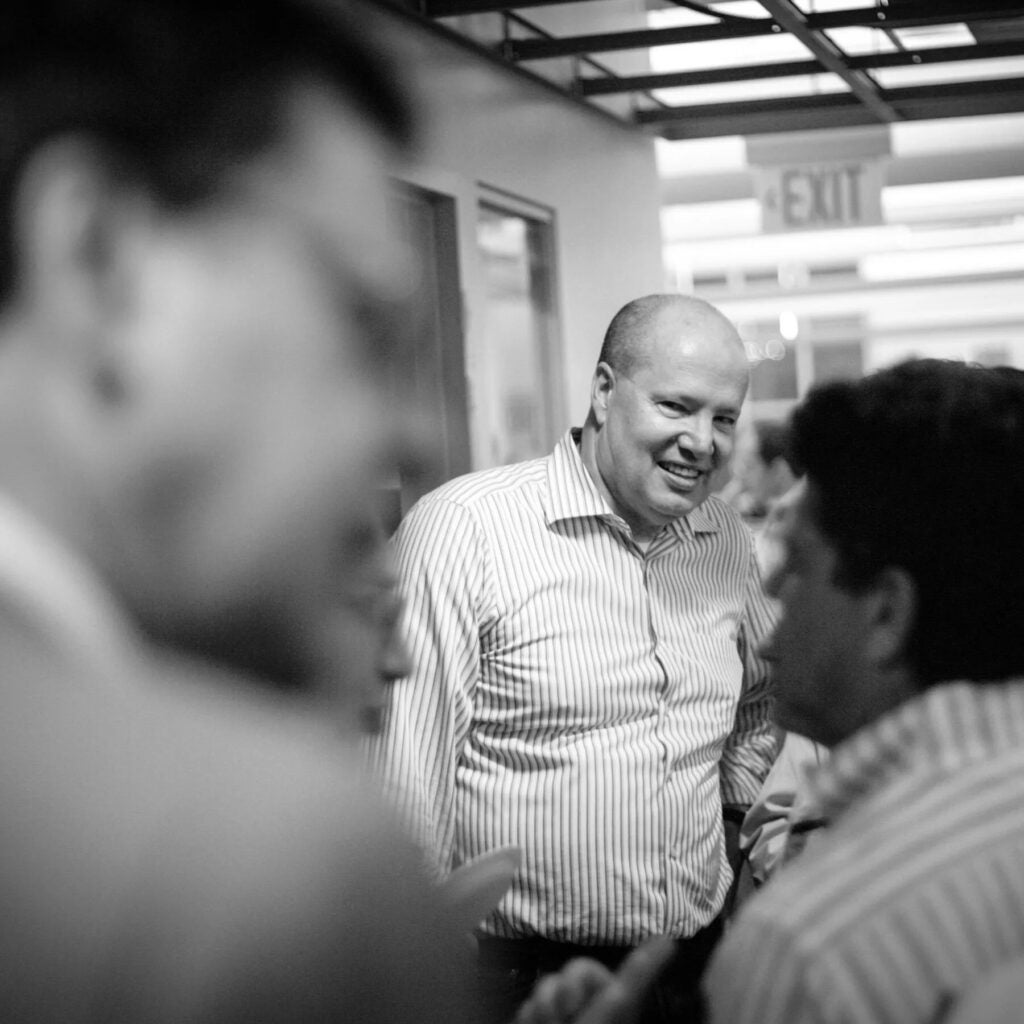
“John said to me more than once half-jokingly that ‘If this journalism thing doesn’t work out, I can always be an electrician,’” recalled Foster, who was an energy journalist for several McGraw-Hill trade publications in Washington, D.C. The “journalism thing” ended up being quite the thing for Geddes for four decades.
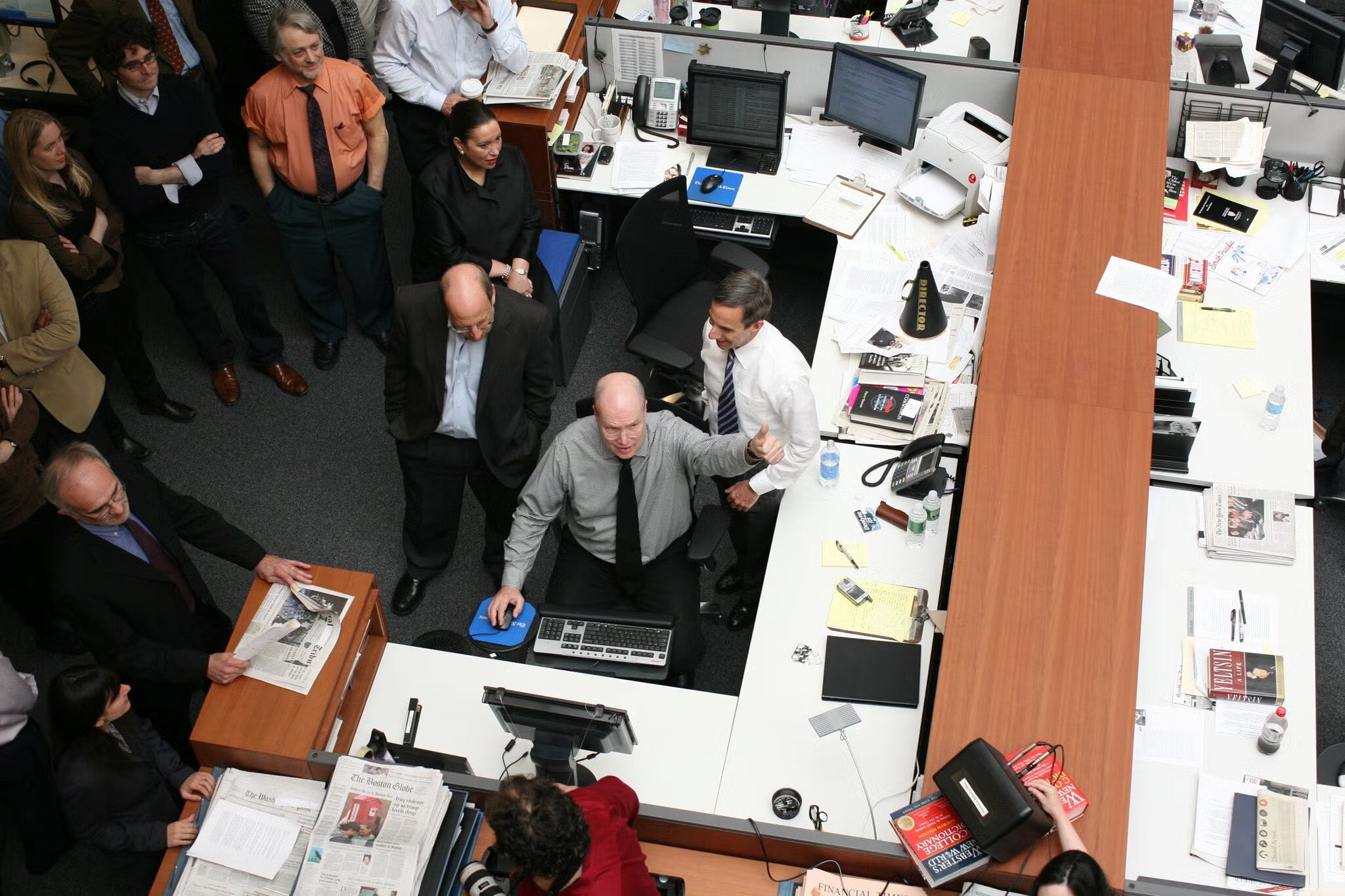
Geddes, the international journalist who became managing editor for The New York Times long after honing his reporting craft on the Kingston Campus, died Oct. 20 at the age of 74 following a brief illness. From 1997 until 2013, Geddes, a Providence native, oversaw the Times’ daily print operation and the newsroom’s challenging switch toward digital, all while the renowned international publication earned 40 Pulitzer Prizes for its reporting in that span.

Former URI classmates fondly remembered Geddes as a prominent, no-nonsense journalist both with the Cigar and across the globe. Classmates also recalled Geddes having a personality that could keep a chaotic newsroom constantly under the proverbial gun under total control with calmness and humor.
“You have to have grace under pressure when you work in that field because you’re always on deadline,” said Carol Cioe Klyman ’75, a former journalist who later became an attorney for the Springfield, Massachusetts-based firm Shatz, Schwartz and Fentin. “He was totally confident, professional, didn’t raise his voice, and was a really good guy and a really good [newsroom] presence.”
Life on the URI campus—and in the United States, in general—in the 1970s was tense. Students frequently held protests railing against the country’s involvement in the Vietnam War, worrying they’d be drafted into service.
The Cigar was also in its infancy establishing itself as a credible news source following the demise of the former Beacon student newspaper in the spring of 1971. Several editorial staff members who left the Beacon subsequently launched the Cigar.
The Cigar and fellow student media outlet WRIU, the campus radio station, were regularly seeking finances to remain operational, according to S. Kent Fannon ’74, who was WRIU’s general manager at the time. It was during those funding fights with the URI Student Senate that Fannon got to know Geddes and the two grew a mutual respect for one another.
“We, in a sense, counted on the Cigar for the hard news, the in-depth investigations, and the goings-on about the University at all levels,” said Fannon, who along with his wife, Diane ’74, became longtime supporters of their alma mater and are the namesakes of the Kent and Diane Fannon Institute for Student Success. “John took his job very seriously and the news was important to him. It was a privilege, as well as an obligation, to get things right.”
After he graduated from URI in 1974, Geddes, born Nov. 19, 1951, earned his master’s in business journalism from the University of Wisconsin-Madison in 1976. From there, Geddes’ Plan B was permanently put in the rearview mirror.
Geddes started his career as a reporter for The Ansonia Evening Sentinel in Connecticut. He moved on to cover business news for the Times from Germany in the late 1970s and reported for the Associated Press-Dow Jones News Service before joining The Wall Street Journal—where he worked for 13 years.
There, Geddes served as Bonn bureau chief, the WSJ/Europe’s managing editor, and the parent paper’s assistant managing editor and national editor. Foster said Geddes had to learn German after taking the Bonn bureau job and was taking German lessons several months later while still working in New York.
“I asked him how his German was and he said ‘I speak fluent bad German,’ which I thought was a great description,” Foster said while laughing. “But John didn’t do things halfway. If he was going to do something, he jumped in and did it.”
In 1994, per the Times, Geddes began his stint with the Times as its business editor and two years later, the paper launched its website nytimes.com. In 1997, Geddes was promoted to deputy managing editor and then managing editor for the Times’ news operations in 2003. Geddes led the newsroom, while also handling budgeting and production, during an era when the Times navigated declining print advertising and an emerging digital world.
The Times installed a paywall for its online content in 2011—two years before Geddes departed the paper—and Geddes, the paper said, was tasked to create new digital endeavors in conjunction with the Times’ business executives.
“We desperately needed his humor and strength during the bumpy transition to becoming a global, digital newsroom,” said former Times executive editor Jill Abramson in an interview with the paper. “John was a steady leader of that passage, which involved painful layoffs and other cuts before the paid subscription plan saved us.”
As the journalism profession continues to evolve, and with social media playing a growing role, hallmarks of Geddes’ career—being factual, fearless and committed to the craft—are principles that URI journalism students should emulate, several alumni say.
“Journalism isn’t always easy. You have to be willing to take a few swings and arrows now and again. And John certainly was willing to do that,” Foster said. “You have to want to pursue the story.”