
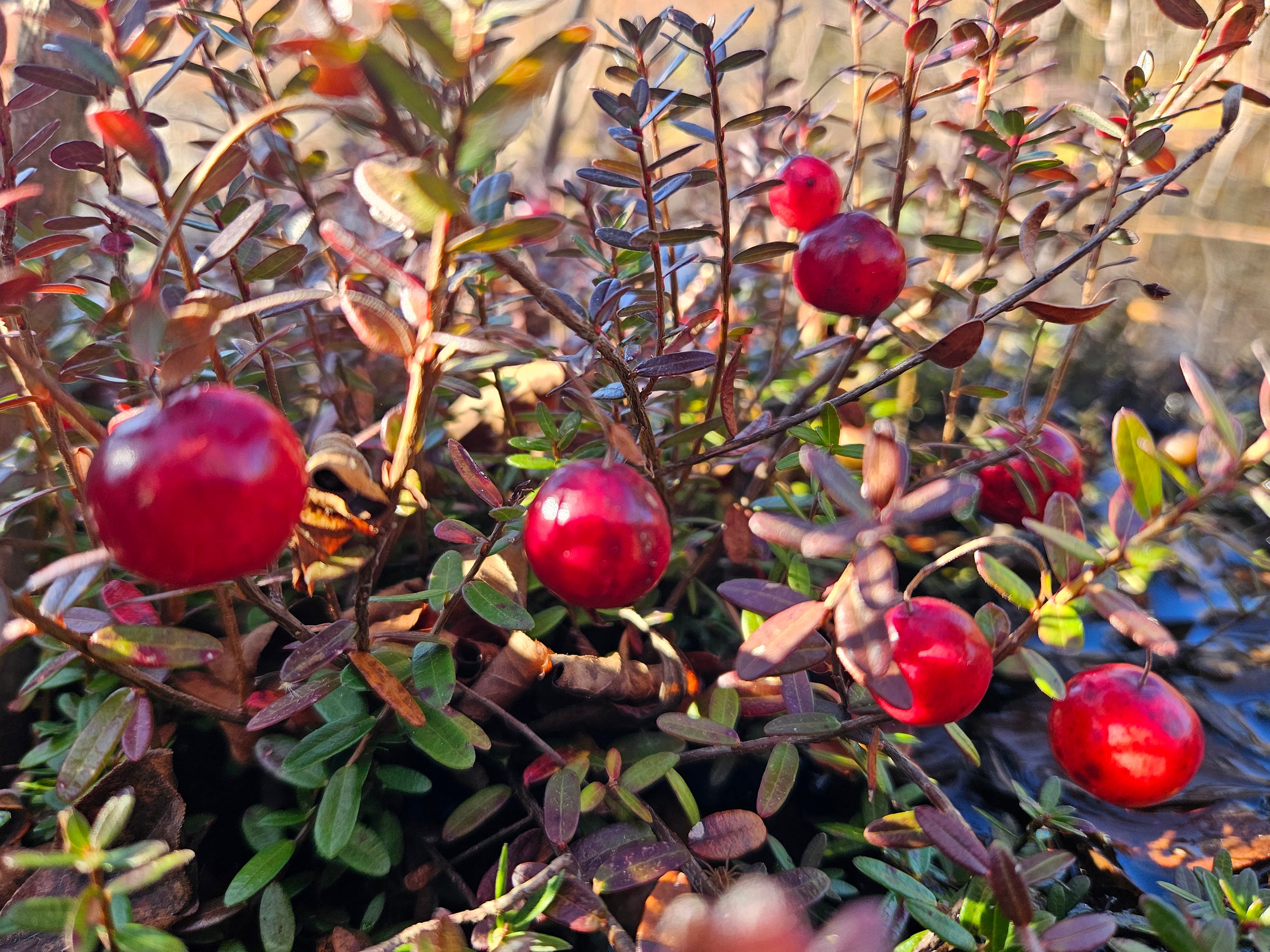
KINGSTON, R.I. – Nov. 13, 2026 – While cranberry bogs are very much associated with the Southcoast, Massachusetts area, they do exist in Rhode Island, even if—fittingly—smaller in number.
“Rhode Island doesn’t make up a huge portion of the cranberry industry, but they’re very valuable in our state all the same,” says graduate student Ren Johnson, of Ohio, a doctoral candidate in the University of Rhode Island’s Department of Biological Sciences. In fact, she’s used some of these local bogs to study how they are pollinated and explore approaches that could benefit all southern New England bogs.
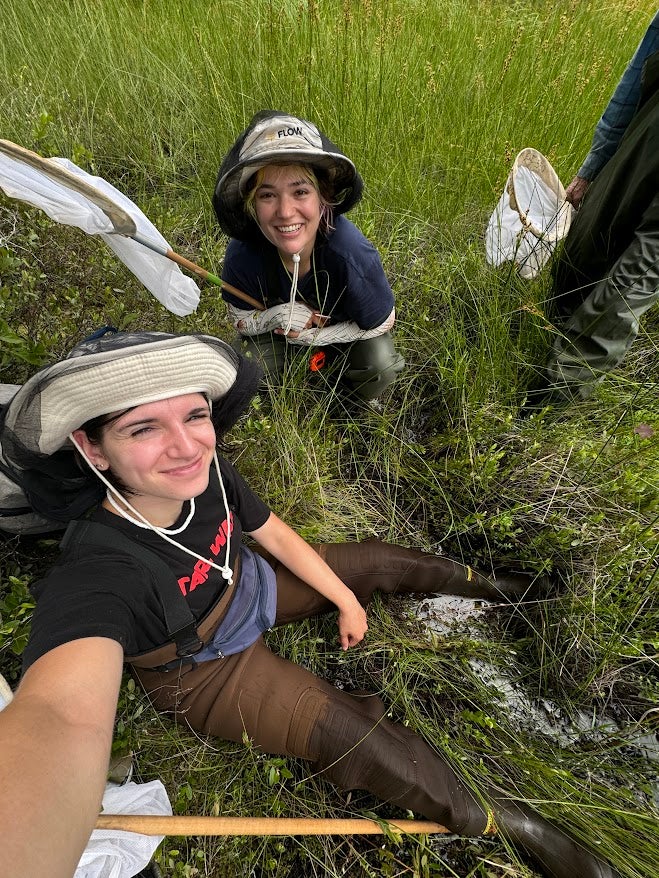
“Knowing the most effective cranberry pollinators is essential to maximizing commercial yields, and helps explain why some wild bogs flourish while others disappear,” said Johnson’s advisor, Professor Evan Preisser. “Ren’s research highlights the importance of highly efficient native pollinators that, if given suitable habitat, could reduce growers’ reliance on imported honey bees while increasing both biodiversity and ecosystem resilience in the face of climate change.”
With cranberry blooms occurring in June and July, Johnson spent time studying fall’s favorite fruit in the summer heat, but now she is enjoying the fruits of her labor, putting the finishing touches on her paper on the pollination study. While she wraps that up, Johnson answered some questions on cranberries.
How prevalent are cranberry bogs in Rhode Island and what conditions do they require?
In terms of wild bogs, they’re kind of all over. I sampled bogs in southern Rhode Island because of proximity to URI, but cranberries are fairly common across Rhode Island wetlands. The real trouble with wild populations is finding them in enough density to warrant sampling. Due to the cranberry’s propensity to grow in wetlands, entire bogs can be flooded one year, but accessible the next year. The plants themselves are pretty hardy.
The commercial bog where we sampled was around 100 acres, but I’m not sure anyone really knows the total area of wild cranberry bogs in Rhode Island. The largest single bog I surveyed was around 10 acres. In general, cranberries prefer acidic wetlands with sandy soil, which is very common in Rhode Island.
What role do pollinators play in cranberry bogs?
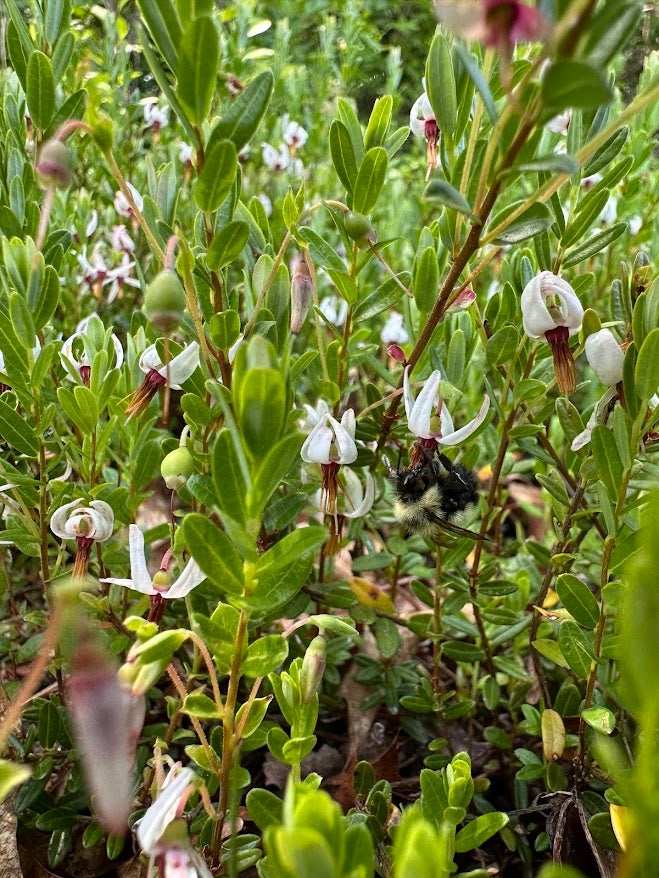
Cranberries owe the majority of their pollination to insect pollinators like bees, flies, and thrips. For bees to properly collect pollen from cranberries, the flowers must be “buzz pollinated.” This is when a bee bites on to the flower’s anthers and vibrates her wings to shake out the pollen.
What insects pollinate cranberries and what did you learn in your two-year study?
Many of our native bees like bumble bees and sweat bees are capable of buzz pollination, but honey bees (originally from Europe) are not. Therefore, cranberry farmers need to essentially saturate the bogs with honey bee hives, making up for honey bees’ inability to buzz pollinate with sheer numbers. This makes cranberries the most expensive crop to pollinate in the eastern United States.
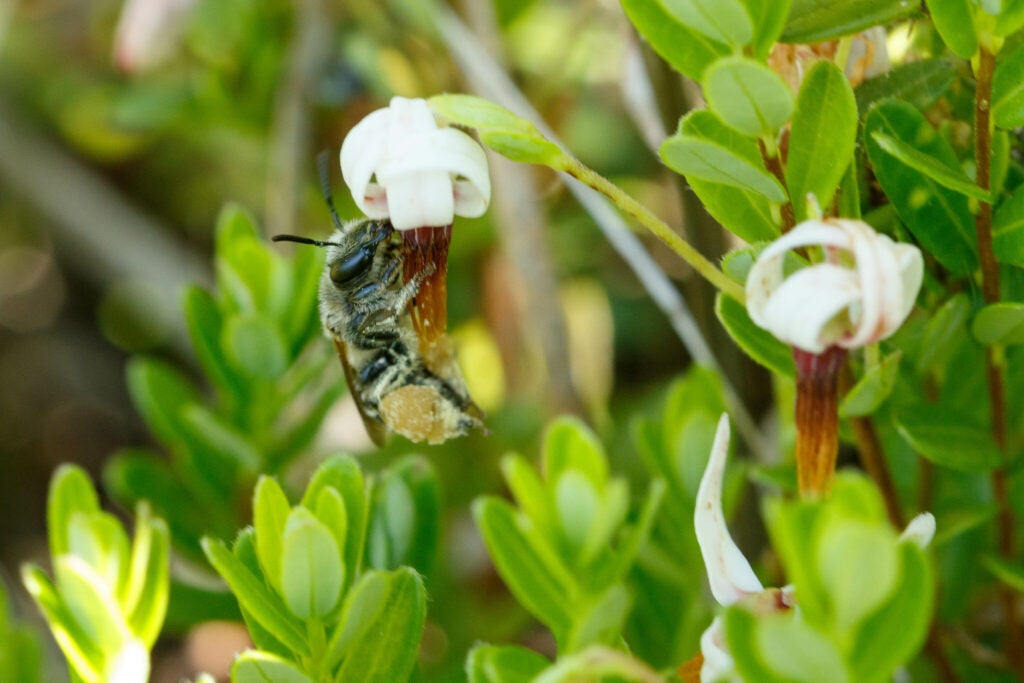
While insects like flower flies and thrips have a hand in cranberry pollination, we focused on bees. In the commercial bog I studied, we found mostly honey bees (since hundreds of hives were rented specifically for crop pollination), but also a large number of bumble bees and smaller numbers of other native bees. Some of the other bees we found that you may recognize are sweat, mining, mason, and carpenter bees. We also found a bee that specializes in pollinating cranberry flowers, the eastern cranberry bee (Melitta americana)—the first time this species has been found in Rhode Island.
Some valuable things we learned are that bumble bees are the primary pollinators of cranberry bogs in a natural setting. We only ever found one honey bee across all of our wild bogs. Bumbles also carry the highest percentage of cranberry pollen (along with the eastern cranberry bee), making them the most loyal pollinators. However, honey bees are still fairly loyal visitors to cranberry flowers and are valuable pollinators in commercial bogs.
Our other native bees were less common and tended to visit a wider range of flowers when collecting pollen. We found a total of 42 bee species visiting cranberry flowers, 35 of which were species other than honey or bumble bees. This makes it clear that cranberries attract a wide range of bees and provide pollen and nectar for many members of Rhode Island’s bee community. Additionally, we found diverse bee communities in both the wild and commercial bogs. It is a relief to know that agricultural activities did not bar native bees from the commercial bog we sampled. Bog owners take pride in the fact that they try to avoid pesticide use when possible, which could encourage bee activity at their bog.
What is happening with cranberry bogs and their pollinators at this time of year and what can people do to support these wild places?
The best thing we can do for cranberries and their pollinators is to protect our wetlands and reduce pesticide use. September through November is the typical time when cranberries are ripe and ready for harvest. Throughout the winter, the plants store energy for flowering in the summer. The bees that pollinate cranberry flowers are currently “overwintering.” They are eating the pollen and nectar provisions that their mothers left for them and growing from tiny eggs into larvae and then adults. They will be full grown and ready to emerge by the time the cranberries bloom next year.
As a New England transplant, was there something that appealed to you about working in an iconic landscape to this part of the country?
Yes, I’m from Cleveland, so this was the first time I was able to see a cranberry plant at all. The idea of doing research with such an iconic New England plant was very romantic to me.
Fun question: What is your favorite way to enjoy cranberry?
I’m a huge forager, so my favorite way to eat a cranberry is fresh off the branch!
Follow URI’s College of the Environment and Life Sciences (URI CELS) on social media for updates on URI research. Visit the URI Bee Lab for information on ways to support local pollinators all year long.